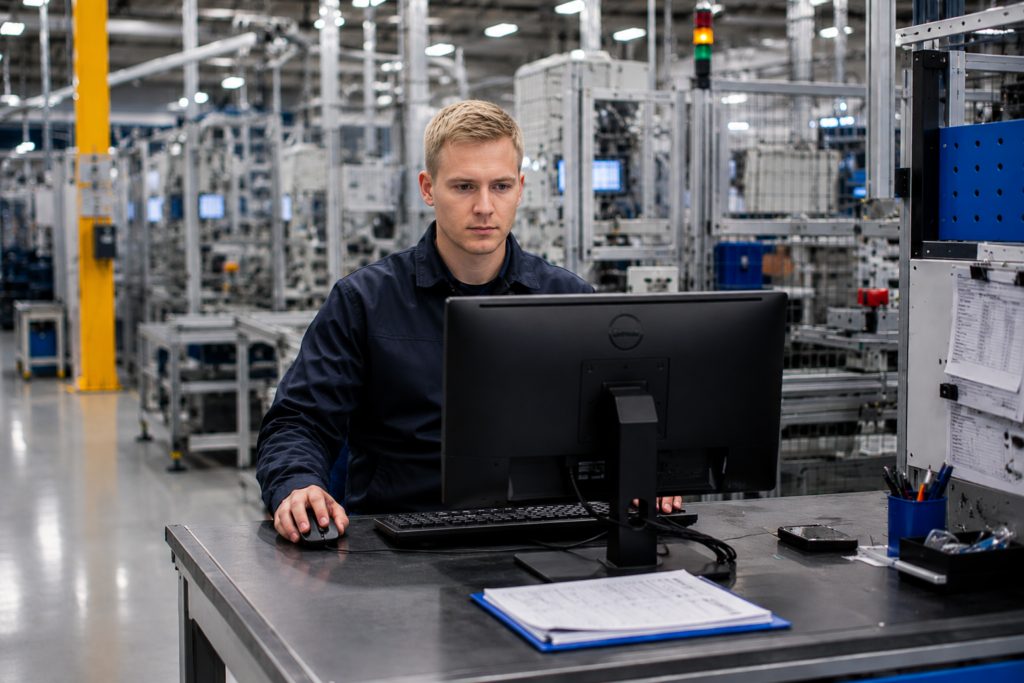
The operating environment of manufacturing has changed rapidly. Production lines increasingly utilize digital systems, mobile applications, production control, quality management, and real-time reporting. At the same time, employees must access these systems quickly, securely, and without unnecessary interruptions.
In many production facilities, the solution to this is shared workstations, tablets, and mobile devices. When multiple employees use the same devices across different shifts and workstations, equipment purchases can be reduced, resource utilization can be improved, and information can be brought to where the work is being done.
However, shared use also brings new challenges.
One Device, Multiple Users
In a typical production facility, employees move between multiple tasks during the day. At the same time, various systems are used for production control, maintenance, quality control, training, and reporting.
Shared workstations and mobile devices are a natural solution in this environment. Instead of each employee having their own terminal device, the same device can be used across multiple shifts and at different workstations.
The challenge arises from the fact that each user should be able to quickly access their own systems without the previous user’s information remaining visible or compromising data security.
Too often, the result is shared credentials, lengthy login processes, or devices where users are left logged in for the next shift.
Production Cannot Wait for Login
In an office environment, a delay of a few minutes during login may be an annoying but tolerable problem. In a production environment, the situation is different.
When a machine operator, quality controller, or maintenance worker cannot immediately access the systems they need, the impact is directly visible in production efficiency. Every extra login, forgotten password, or locked user account adds waiting time and disrupts workflow.
Therefore, the greatest benefit of shared devices only emerges when their use is genuinely seamless.
Fast User Switching Keeps Production Moving
At its best, a shared workstation functions in the same way as access control in a production facility.
An employee authenticates using, for example, an access card, proximity tag, or biometric authentication. Within a few seconds, they access their own applications, settings, and tasks. When the work is done, the user logs out and the next employee can take the device into use just as quickly.
This kind of fast user switching offers several benefits:
- Less waiting time during shift changes
- Faster access to production-critical systems
- Fewer user account lockouts
- Fewer password-related support requests
- Better user experience throughout the production facility
When employees can focus on their actual work, production efficiency also improves.
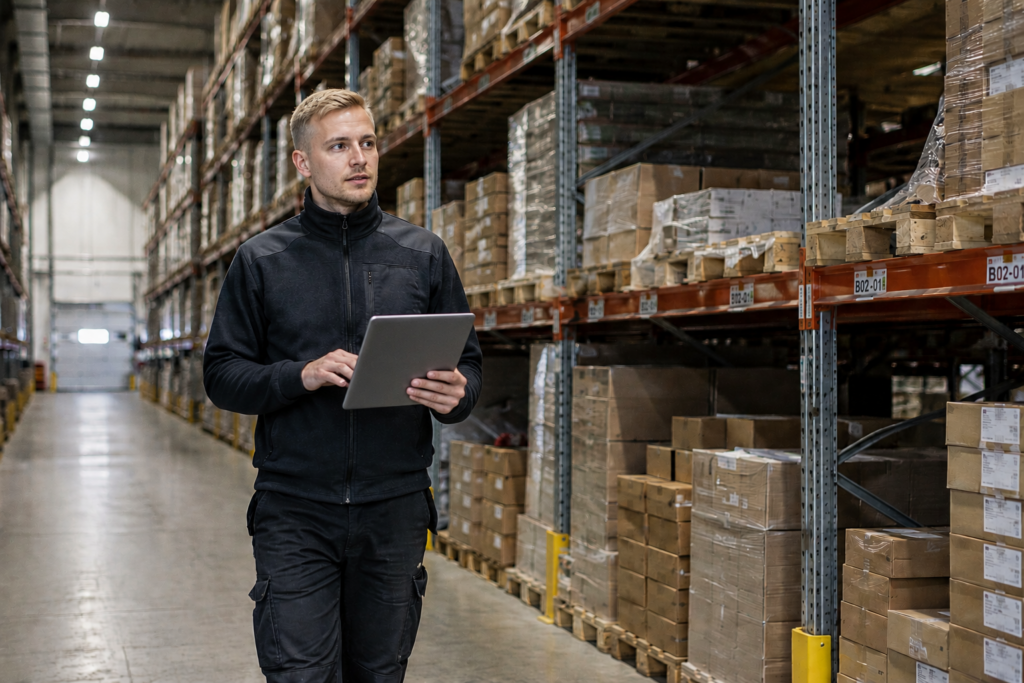
Tablets and Phones Bring Information to Where the Work Is Done
Digitalization is no longer limited to workstations. An increasing number of production facilities utilize tablets and mobile devices for, for example:
- Displaying work instructions
- Quality control
- Inspections and audits
- Maintenance tasks
- Training
- Reporting production deviations
Shared mobile devices enable information to travel with the employee in production facilities instead of the employee having to move to a workstation to search for the information they need.
This speeds up decision-making, reduces unnecessary movement, and helps solve problems where they arise.
Security Improves When Responsibilities Are Clear
Shared devices often raise concerns about traceability. Who made a change to the system? Who approved the quality control result? Who recorded the maintenance action?
When each user authenticates with their own credentials regardless of whether they are using a workstation, tablet, or phone, all actions can be linked to the correct person. This significantly improves:
- Audit readiness
- Compliance
- Data security
- Investigation of deviations
- Accountability throughout the organization
If a problem occurs in production, events can be traced quickly without time-consuming investigation work.
Fewer Devices, More Benefits
Shared use also brings financial benefits.
When devices do not need to be purchased separately for each employee, investment costs decrease. At the same time, device management, maintenance, and updates are simplified.
However, the real benefit comes from productivity. When login is accelerated by seconds with each use and password-related problems decrease, the saved time quickly accumulates to tens or even hundreds of hours per year.
The Production Facility of the Future Is Built on Flexible Tools
The competitiveness of manufacturing is increasingly based on the ability to combine data security, efficiency, and user-friendliness.
Shared workstations, tablets, and mobile devices offer an excellent opportunity for this. When implemented correctly, they accelerate work, reduce production disruptions, improve data security, and bring critical information to employees’ disposal precisely when it is needed.
Ultimately, it is not about devices but about how quickly and securely people can do their work. When access to systems functions seamlessly, production keeps running, data security improves, and the entire organization operates more efficiently.
